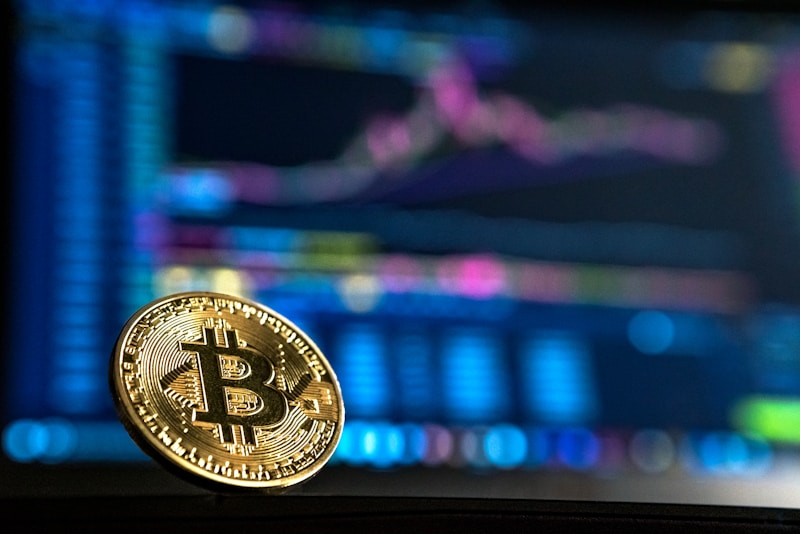
It's been roughly two years since Bitcoin's fourth halving in April 2024 reduced block rewards from 6.25 BTC to 3.125 BTC. If history is any guide, we're deep into the post-halving cycle — the phase where supply shock meets surging demand, and prices tend to reach new all-time highs. But 2026 has played out differently from any previous cycle. Let's break down what's actually happening.
The Halving Cycle: Why 2026 Is Different
Every previous Bitcoin halving (2012, 2016, 2020) followed a remarkably consistent pattern: a 12–18 month lag before explosive price appreciation. The 2020 halving, for example, saw BTC grind sideways through most of 2020 before the massive rally of 2021. The 2024 halving was expected to follow suit — with the bull run peaking sometime in mid-to-late 2025.
But 2026 arrived with a twist. While prices did surge in late 2024 and early 2025, driven primarily by the spot Bitcoin ETF inflows that began in January 2024, the correction that typically follows a cycle peak was milder than expected. Instead of the 70–80% drawdowns seen in prior cycles, BTC found strong support above the previous cycle's all-time high — a structural shift that signals maturation.

The ETF Effect: Institutional Money Changed the Game
The single biggest difference between the 2024 halving cycle and every previous one is the spot Bitcoin ETF. When BlackRock's iShares Bitcoin Trust (IBIT) and its competitors launched in the U.S., they created a demand sink that simply didn't exist before. Institutional allocators — pension funds, endowments, sovereign wealth funds — now had a regulated, familiar vehicle to gain Bitcoin exposure.
This institutional demand created a floor under Bitcoin's price. Every significant dip was met with aggressive ETF buying, which absorbed selling pressure from miners, long-term holders taking profits, and macroeconomic uncertainty. The result is a price chart that looks less like the volatile S-curve of previous cycles and more like a steady upward slope punctuated by healthy corrections.
Mining Economics Post-Halving
The halving didn't just affect supply — it transformed mining economics. Block rewards of 3.125 BTC meant miners' revenue per block dropped by 50% overnight. The miners who survived were those who had invested in next-generation ASIC hardware, secured cheap energy contracts, or pivoted to diversified revenue streams.
Several publicly traded mining companies consolidated the industry. Marathon Digital, CleanSpark, and Riot Platforms expanded their hashrate aggressively, while smaller, less efficient operations shut down or were acquired. The network hashrate, after a brief post-halving dip, resumed its climb — a testament to Bitcoin's economic resilience.

Transaction fees have become a more meaningful share of miner revenue, particularly during periods of high on-chain activity. The Ordinals and BRC-20 inscription phenomenon of 2023–2024, while controversial, proved that Bitcoin's blockchain can sustain elevated fee markets when demand for blockspace exists. Runes, the newer token standard on Bitcoin, has continued to generate meaningful fee revenue in 2026.
On-Chain Metrics: What the Data Says
For investors who prefer data over narrative, Bitcoin's on-chain metrics paint an interesting picture heading into the second half of 2026:
- MVRV Ratio: Bitcoin's Market Value to Realized Value ratio has oscillated between 1.5 and 2.5 throughout 2026 — well below the 3.5+ "overheated" zone that signaled cycle tops in prior eras. This suggests the market isn't euphoric despite elevated nominal prices.
- Long-Term Holder Supply: The percentage of Bitcoin held for over 155 days has increased steadily, indicating accumulation rather than distribution. HODLers are holding tight.
- Exchange Reserves: Bitcoin held on exchanges continues to decline, now at multi-year lows. Fewer coins on exchanges means less available selling pressure and tighter supply.
- Active Addresses: Network usage remains robust with daily active addresses holding above 2024 levels, suggesting genuine utility and not just speculative activity.
- NUPL (Net Unrealized Profit/Loss): Currently sitting in the 0.25–0.50 range, indicating the market is in a "belief" phase — profitable but not yet euphoric.
Macroeconomic Backdrop: Tailwinds and Headwinds
No asset class exists in a vacuum, and Bitcoin's 2026 trajectory is heavily influenced by the global macroeconomic environment. Here are the key factors:
Tailwinds
- Global Liquidity Expansion: Central banks, after a period of quantitative tightening through 2023–2024, have gradually eased monetary policy. The Federal Reserve, ECB, and Bank of Japan have all cut rates, injecting liquidity into financial markets. Historically, Bitcoin performs exceptionally well during periods of monetary easing.
- Fiat Currency Weakness: The U.S. dollar has softened against major currencies, making hard assets like Bitcoin more attractive as stores of value. Countries with struggling currencies — Argentina, Turkey, Nigeria — have seen surging Bitcoin adoption as citizens seek inflation hedges.
- Regulatory Clarity: The EU's Markets in Crypto-Assets (MiCA) regulation is now fully in effect, providing a comprehensive framework that has attracted institutional capital. In the U.S., while comprehensive federal legislation remains stalled, the SEC's more pragmatic approach under current leadership has reduced regulatory uncertainty.
- Strategic Bitcoin Reserves: El Salvador's Bitcoin treasury has appreciated significantly, and other nations have begun exploring similar strategies. The concept of Bitcoin as a strategic reserve asset has moved from fringe idea to mainstream policy discussion.
Headwinds
- Geopolitical Tensions: Ongoing conflicts and trade tensions create uncertainty. While Bitcoin has sometimes acted as a safe haven during crises, it has also been sold off during risk-off episodes.
- Interest Rate Uncertainty: If inflation proves stickier than expected, central banks may pause or reverse rate cuts, tightening financial conditions.
- Competition from Other Assets: Gold has also rallied in 2026, hitting new all-time highs. Some capital that might have flowed into Bitcoin is instead being allocated to traditional safe-haven assets.
The AI-Crypto Convergence
One of the most significant narratives of 2026 is the convergence of artificial intelligence and cryptocurrency. While this was dismissed as a buzzword in 2023, it has materialized into real use cases:

Decentralized Compute Networks: Projects providing distributed GPU computing power for AI model training and inference have seen massive growth. These networks use blockchain-based token incentives to coordinate idle GPU resources globally, offering a cheaper alternative to centralized cloud providers like AWS and Azure.
AI-Driven Trading: Sophisticated AI trading systems now dominate crypto market-making and arbitrage. While this increases market efficiency, it also means that retail traders face increasingly sophisticated competition.
On-Chain AI Agents: Autonomous AI agents that can transact on blockchains have evolved from novelty to utility. These agents can manage DeFi positions, execute complex trading strategies, and interact with smart contracts — all without human intervention.
What to Expect for the Rest of 2026
Based on historical patterns, current on-chain data, and the macroeconomic environment, here's a balanced outlook for Bitcoin through the end of 2026:
Bull Case: If global liquidity conditions remain favorable and institutional adoption continues its trajectory, Bitcoin could challenge new all-time highs. The combination of reduced supply (halving), persistent institutional demand (ETFs), and monetary easing creates a powerful setup. A move into uncharted price territory is plausible, particularly if a major catalyst — such as a U.S. strategic Bitcoin reserve announcement or a major sovereign nation adoption — materializes.
Bear Case: A macroeconomic shock — whether from sticky inflation, a financial crisis, or geopolitical escalation — could trigger a risk-off event that pulls Bitcoin down alongside equities. A recession scenario would be particularly challenging, as it would likely trigger both institutional selling and reduced retail interest.
Base Case: Bitcoin continues to grind higher with periodic 15–25% corrections, consolidating above the 2024–2025 range and gradually establishing a new higher trading range. Volatility continues to decline relative to prior cycles as institutional participation grows.

Practical Takeaways for Investors
Regardless of where you think Bitcoin is headed, several principles remain sound:
- Dollar-Cost Averaging (DCA) Still Works: The simplest strategy remains one of the most effective. Consistent, regular purchases smooth out volatility and remove the need to time the market.
- Self-Custody Matters: With institutional adoption at record highs, counterparty risk is a real concern. "Not your keys, not your coins" is as relevant in 2026 as ever. Use a hardware wallet for significant holdings.
- Position Sizing Is Critical: Bitcoin should be a strategic allocation within a diversified portfolio, not an all-in bet. Most financial advisors suggest 1–5% as a reasonable allocation for investors with a high risk tolerance.
- Stay Educated: The crypto landscape evolves rapidly. Understanding the fundamentals — not just price charts — gives you the conviction to hold through volatility.
- Tax Planning: If you've been in the market since the 2024–2025 run-up, you may have significant unrealized gains. Plan ahead for tax implications, especially if you're considering taking profits.
Conclusion
Bitcoin in 2026 is a fundamentally different asset than it was in any previous cycle. The spot ETFs have institutionalized demand, mining has consolidated and professionalized, on-chain metrics show healthy accumulation, and the macroeconomic environment is cautiously supportive. The days of 90% drawdowns and multi-year bear markets may be behind us — not because Bitcoin has stopped being volatile, but because the demand base has diversified and deepened beyond recognition.
Whether you're a long-time HODLer or just getting started, the post-halving landscape of 2026 offers both opportunity and risk. The key is to maintain perspective: Bitcoin's long-term thesis — a decentralized, scarce, censorship-resistant store of value — remains intact and stronger than ever. The fundamentals haven't changed. The world around Bitcoin has.


