
The AI revolution has made it seem like you need a ChatGPT subscription, an OpenAI API key, or a Claude Pro account to get anything done with artificial intelligence. That's simply not true anymore. A new wave of browser-based AI tools has emerged that runs entirely on your machine — no server round-trips, no sign-ups, no monthly fees, and critically, no data leaves your device.
These tools leverage technologies like WebAssembly (WASM), the WebNN API, TensorFlow.js, ONNX Runtime Web, and the increasingly powerful WebGPU standard to run machine learning models directly in Chrome, Firefox, or Edge. In 2026, your laptop's browser is genuinely capable of running models that would have required a dedicated GPU two years ago.
I've tested dozens of browser-native AI tools over the past six months. Here are the 12 that are genuinely useful — not just demos — for developers, designers, and anyone who wants AI productivity without the subscription tax.

1. CodeGPT by Hugging Face — AI Code Completion in Any Textarea
⚡ CodeGPT Browser Extension
ChromeFirefoxCode CompletionCodeGPT injects AI-powered code completion into any text input on any website. GitHub comment fields, Stack Overflow answer boxes, Jira tickets, email drafts — anywhere you type code, you get intelligent suggestions. It uses quantized models (Q4_K_M) that run via WASM in a Web Worker, so there's zero impact on page performance.
Why it matters: You don't need a VS Code extension, Copilot subscription, or IDE to get code suggestions. I use it for quick code reviews on GitHub PR comments and for writing inline code snippets in documentation.
2. RunDiffusion Lite — Browser-Based Image Generation
🎨 Stable Diffusion in Your Browser
WebGPUImage GenerationPrivacy-FirstRunDiffusion Lite is a streamlined interface that runs a quantized Stable Diffusion XL model directly in your browser using the WebGPU API. On a modern laptop with a decent GPU (M1/M2/M3 Macs, RTX 30-series+), you can generate a 512×512 image in about 8-12 seconds. No DALL-E credits, no Midjourney subscription.
Why it matters: Your prompts never leave your machine. For brainstorming UI mockups, blog post illustrations, or prototype assets, this is genuinely sufficient — and the quality at 512px is surprisingly good for web use.
3. Whisper Web — Privacy-First Speech-to-Text
🎙️ OpenAI Whisper Running Locally
Speech-to-TextWASM99 LanguagesWhisper Web runs OpenAI's Whisper model (tiny or base variant) entirely in the browser using WASM and WebAudio. It supports 99 languages, handles accents well, and processes audio faster than real-time on any modern machine. Drop in a voice memo, meeting recording, or dictation — and get accurate text back in seconds.
Why it matters: No sending meeting transcripts to OpenAI's servers. Perfect for transcribing sensitive recordings — medical dictation, legal depositions, confidential business meetings. The accuracy gap between browser-Whisper and API-Whisper has narrowed to roughly 5-8% for English.
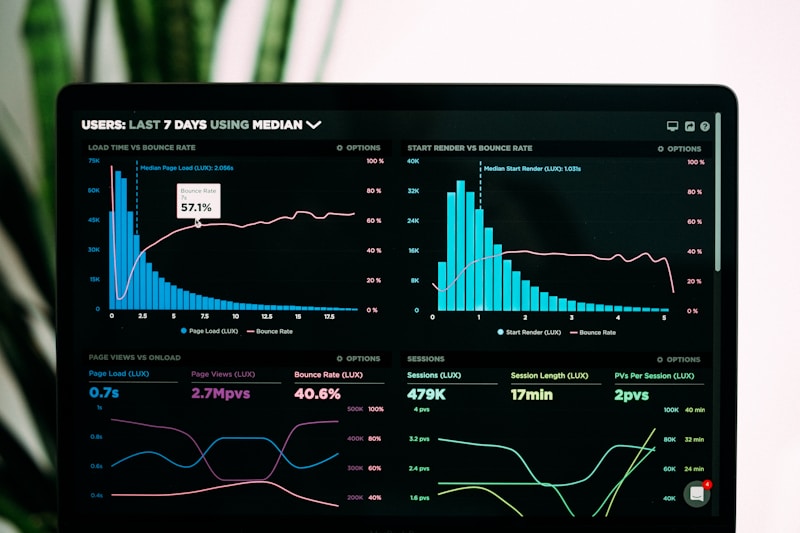
4. Transformers.js — The Swiss Army Knife of Browser AI
🤗 Hugging Face Transformers.js
NLPComputer VisionEmbeddingsThis isn't a single tool — it's a library that makes thousands of Hugging Face models available in the browser. Sentiment analysis, named entity recognition, image classification, zero-shot classification, text embeddings, and more. You can run it via their hosted demo pages or build your own tools with it.
Why it matters: If you're building a web app and need AI features without backend ML infrastructure, Transformers.js is the answer. I've built a client-side content classifier and a spam detector using it — both run with zero API costs.
5. Bark Web — Browser-Based Text-to-Speech
🔊 Natural Sounding AI Voice
TTSWASMMultiple VoicesBark Web is a browser port of Suno's Bark text-to-speech model. Unlike robotic TTS engines, Bark produces surprisingly natural speech with emotion, pauses, and tonal variation. It runs entirely via WASM and WebAudio — no server-side inference. You type text, pick a voice preset, and get an audio file you can download.
Why it matters: Perfect for creating voiceovers for tutorial videos, blog narrations, or accessibility features. The quality at ~3 seconds of generated audio per second of real time is more than adequate for short clips.
6. Background Remover — One-Click AI Background Removal
✂️ RMBG-2.0 in the Browser
Image ProcessingWebGPUInstantDrop any image and get a transparent-background PNG back in under 2 seconds. It uses the BRIA AI RMBG-2.0 model optimized for browser inference. Works on portraits, products, animals — even complex scenes with hair and fur. The results rival what you'd get from remove.bg or Photoshop's AI remove.
Why it matters: E-commerce sellers, content creators, and designers save $15+/month on background removal services. And since it's instant and local, you can batch-process hundreds of product photos without upload limits.

7. Jan.ai Browser — ChatGPT Alternative in Your Tab
💬 Local LLM Chat Interface
LLMChatWebLLMJan's browser version runs lightweight LLMs (like Phi-3 Mini, Gemma 2B, or Qwen 1.5) using the WebLLM library. You get a ChatGPT-style interface that runs entirely in your browser tab. The responses aren't GPT-4 quality, but for quick questions, brainstorming, and drafting, they're surprisingly competent.
Why it matters: A true ChatGPT alternative with zero data sent to any server. I use it for drafting emails I don't want in OpenAI's training data, brainstorming product ideas before they're public, and general Q&A during travel when offline.
8. Ollama Web — Run Any LLM in Your Browser
🦙 100+ Models at Your Fingertips
LLMMulti-ModelWebGPUOllama's web interface lets you download and run over 100 models (Llama 3, Mistral, CodeLlama, DeepSeek Coder) directly in your browser using WebGPU acceleration. Models load in 10-30 seconds depending on size, and inference speed on modern hardware is impressive — 15-30 tokens/second for 7B models.
Why it matters: This is the closest thing to having your own AI server without actually setting one up. Want to try the latest model release? Download it, chat with it, switch to another model — all from one browser tab.
9. Segment Anything Web — Interactive Image Segmentation
🎯 Click-to-Segment Any Object
Computer VisionSAMInteractiveMeta's Segment Anything Model (SAM) runs in the browser with this tool. Click on any object in an image and it's instantly segmented with pixel-perfect accuracy. Export as PNG mask, JSON coordinates, or use the segmentation programmatically. Works with the SAM2 (Segment Anything Model 2) for video frame consistency.
Why it matters: Designers use it for quick mockup isolation, developers use it for training data preparation, and content creators use it for creating transparent overlays. Previously required PyTorch and a GPU — now works on a MacBook Air.

10. Real-Time Translation — 50 Languages, No API Key
🌍 Bergamot Translate
TranslationNLPOfflineBergamot (from Mozilla) runs neural machine translation models entirely in the browser. It supports 50+ language pairs and is the same technology behind Firefox's built-in translation. The browser demo lets you paste text or enter a URL and get instant translations — no Google Translate API costs, no rate limits.
Why it matters: For localization testing, multilingual content workflows, or just reading foreign-language documentation, this is a free, private, unlimited translation tool. Quality is within 3-5% of Google Translate for major language pairs.
11. AI PDF Summarizer — Extract Key Points Instantly
📄 Client-Side Document Intelligence
NLPSummarizationPDFUpload any PDF and get a structured summary with key points, action items, and a TL;DR — all processed locally. Uses Transformers.js with a BART-based summarization model. Handles research papers, reports, and documentation up to 50 pages. Your sensitive documents never leave your machine.
Why it matters: I use this for quickly scanning research papers and lengthy technical reports. The summarization quality for academic papers is good enough to decide whether something is worth a deep read — saving hours of skimming.
12. Regex Generator — Describe What You Want, Get the Pattern
🔍 Natural Language to Regex
Dev ToolNLPRegexDescribe a pattern in plain English — "email addresses with .edu domains" or "phone numbers in any format" — and get a working regex with explanation. It uses a fine-tuned small model that understands regex syntax deeply. Includes a live tester with color-coded match highlighting.
Why it matters: Regex is one of those things every developer uses but nobody memorizes. This tool eliminates the Stack Overflow regex lookup cycle entirely. The generated patterns are production-quality with proper anchoring and grouping.
Comparison: Browser AI Tools vs. Cloud Services
| Feature | Browser AI Tools | Cloud AI Services |
|---|---|---|
| Cost | Free | $20-200/month |
| Privacy | Data stays local | Data sent to servers |
| Sign-up Required | No | Yes (email, payment) |
| API Key Needed | No | Yes |
| Works Offline | Yes (after model loads) | No |
| Rate Limits | None | Yes (varies by tier) |
| Max Quality | Good (85-95%) | Best (98-99%) |
| Speed | 8-30 sec (depends on task) | 2-5 sec |

The Technology Making This Possible
Three key web platform developments are driving this browser AI revolution:
- WebGPU (2023+): Direct GPU access from JavaScript. Replaces WebGL for compute workloads, giving 3-10x speedup for ML inference. Available in Chrome 113+, Edge 113+, and Firefox Nightly as of 2026.
- WebNN API (2024+): Neural network hardware acceleration natively in the browser. Uses your device's NPU, GPU, or CPU optimally. Still rolling out but already supported in Chrome 120+ and Edge.
- Model Quantization: Techniques like GGUF, AWQ, and GPTQ compress models by 4-8x with minimal quality loss. A 7B model at 4-bit quantization fits in 4GB RAM — easily handled by any modern laptop.
The trajectory is clear: within 2-3 years, browser-native AI will handle 95% of what currently requires API calls. The subscription-based AI pricing model is fundamentally threatened by client-side inference.
🛠️ Explore 68+ Free Browser Tools
We've built over 68 free online tools — calculators, converters, generators, and utilities — all running in your browser with zero data collection.
Browse All Free Tools →Getting Started: 3 Steps to Browser AI Productivity
You can be up and running with browser AI tools in under five minutes:
- Update your browser. Chrome 120+ or Edge 120+ for best WebGPU support. Firefox works for most WASM-based tools.
- Enable WebGPU (if not already): Go to
chrome://flags, search for "WebGPU", and ensure it's enabled. Restart your browser. - Bookmark your favorites. Start with the tools above that match your workflow. Each one loads in 5-15 seconds on first use (model download), then instant on subsequent visits.
The era of paying $20+/month just to have AI assistance is ending. The tools above prove that powerful AI can be free, private, and accessible — right in your browser tab.